
Sandy Springs, GA · Garage Door Service
When Your Sandy Springs Garage Door Predates Insulation Rules
Sandy Springs homes built 1951-2007 often carry single-layer steel doors from before insulation codes existed. Here's what that means for cost, comfort, and when to leave it alone.
- Repairs & new doors
- Springs & openers
- Serving 8 nearby communities
Leaving It Alone
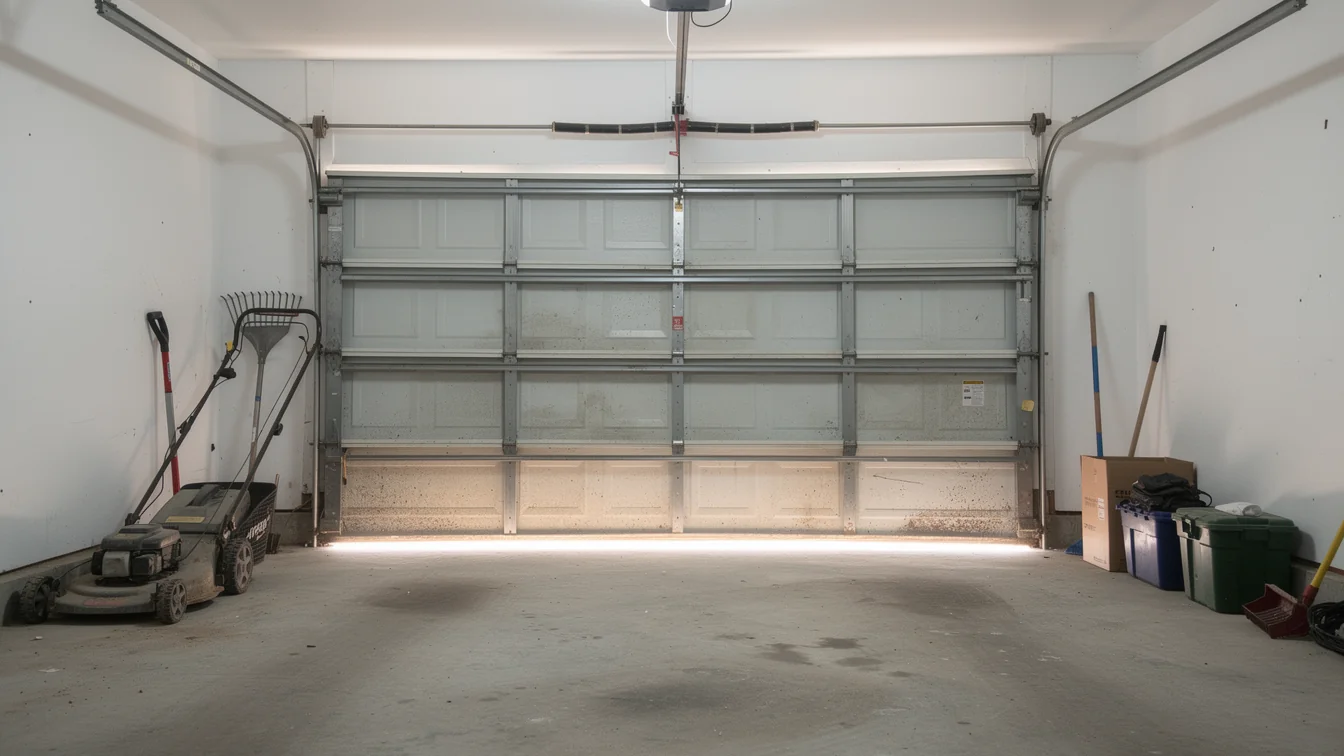
Not every uninsulated door needs to come out. If the garage sits apart from the living space, or you only use it to park and store, a single-layer steel panel from the 1980s can keep doing its job for years yet. It's a door, not a wall of the house, and plenty of owners in this area never touch the insulation question because the room behind it doesn't need to hold a temperature.
Where it matters is an attached garage with a shared wall to a bedroom, laundry room, or finished space above it - a layout common in houses from that same build era. If cold air moves through the door and into that shared wall, you'll feel it on the other side long before the door itself fails. That's the case where leaving it alone costs you more in the gas bill than the door is worth keeping.
We'll tell you straight if your door doesn't need work. A door that still seals, still balances, and still opens without strain doesn't need to be replaced just because it's old or uninsulated. We don't sell insulation retrofits to houses where the garage is detached from anything that needs heat.
The Cost of This Job
Two different jobs get lumped together here, and they cost differently. One is swapping panels on an existing frame for insulated steel - cheaper, faster, limited to doors where the track and springs are still sound. The other is a full door and track replacement, which costs more because you're buying new hardware along with the insulated panel.
What we can't do is quote a number without seeing the door. A single-layer door from a house built in the 1980s may have torsion hardware that's original to the house - over forty years on the same springs - and that changes the math, because you're now pricing a spring replacement on top of the door itself. Houses from the later end of the 1951-2007 range sometimes already have insulated doors, since manufacturers started offering them before code required anything.
The honest limitation: we don't carry every panel size and color in stock, and matching an older single-layer door's panel profile for a partial retrofit sometimes means a parts order with a wait attached. If your door is old enough that the manufacturer doesn't make that profile anymore, full replacement ends up being the faster and often cheaper path than chasing discontinued parts.
The Situation
Housing in this service area went up mostly between 1951 and 2007, with the median landing around 1980. That puts a huge share of garage doors here right in the window before insulated steel doors were a standard builder option - they were an upgrade you paid extra for, and most tract builders in that era skipped it. Across the 28 named sections that make up this area, the bulk of the stock dates to the 1980s and 90s, which means a lot of original garage doors are now entering their fifth decade.
Those doors are typically a single layer of steel, sometimes with a thin fiberboard backing that does almost nothing for heat transfer. They were built to keep weather and intruders out, not to hold a temperature. That's not a defect - it's just what a garage door was in 1985. The gap only becomes a problem when the garage has become something more than storage, which happens a lot as houses from that era get finished out or converted.
How Local Conditions Play In
This area sits in a cold-moderate climate band - not the deep-freeze winters of the upper Midwest, but cold enough that an uninsulated steel door loses real heat on the nights it drops well below the daytime high. A single-layer door doesn't stop that cold air; it just slows it down a little, and in an attached garage that cold air sits against the wall shared with the rest of the house.
With 66,165 owner-occupied houses in this service area, a lot of them built in that same 1951-2007 window, this isn't a rare situation - it's the default. The door that came with the house is doing exactly what it was built to do, which was never meant to include holding heat.
We don't push insulation on every call. If your garage is detached, or the shared wall is already insulated separately from the door, swapping the door buys you less comfort than you'd expect for the cost. We'll walk the garage with you and tell you which wall is actually losing the heat before we talk about the door.
Frequently asked questions
How do I know if my garage door has any insulation at all
Check the back of a panel from inside the garage. A single layer of steel with nothing behind it, or a thin sheet of fiberboard, means no real insulation. An insulated door has a visible foam core, usually an inch or more thick, sandwiched between two steel skins. If your house dates to the 1980s or earlier and the door looks original, it's almost certainly single-layer.
Is it worth insulating a door on a detached garage
Usually not, unless you're heating that space directly. Insulation on a garage door only pays off when it's slowing heat loss into a room you're already paying to heat or cool. A detached garage with no conditioned space behind it won't show much benefit from the upgrade, and we'll tell you that instead of selling you a door you don't need.
Can I just add a kit to my existing door instead of replacing it
Sometimes. Foam-board insulation kits fit between the horizontal ribs on many steel doors and work fine if the door panel and hardware are still in good shape. They won't match the performance of a true insulated door, but for an older single-layer door that's otherwise sound, it's a lower-cost way to cut some of the heat loss without a full replacement.
Related garage door services in Sandy Springs
More garage door guides
Book garage door service in Sandy Springs
Call now or request a quote - tell us what the door is doing and where you are.