
Sandy Springs, GA · Garage Door Service
Garage Door Opener Installation for Sandy Springs Homes
Replacing a dead garage door opener in Sandy Springs? See what installation involves, why older 1980s-90s openers fail here, and when DIY makes sense.
- Repairs & new doors
- Springs & openers
- Serving 8 nearby communities
What the Fix Involves
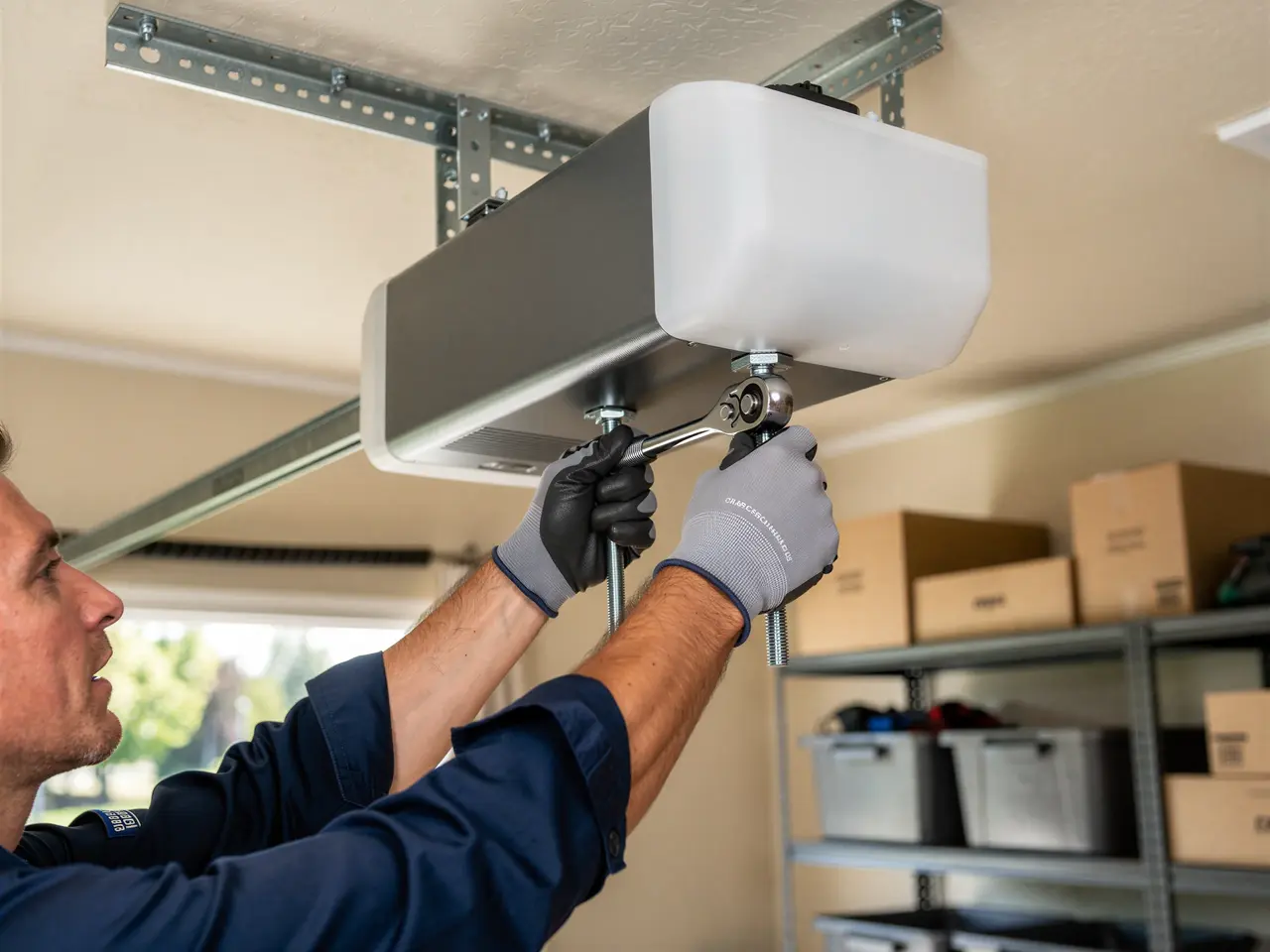
A proper opener install is more than bolting a motor head to the ceiling. We pull the old unit, check the header bracket it hangs from, and size the new motor to the door's actual weight and spring tension, not just whatever horsepower number is on the box at the store. Belt-drive, chain-drive, or wall-mount jackshaft, the wiring has to run to a dedicated circuit if the old one was shared with a light fixture, which is common in houses that got a retrofit opener decades after the garage itself was built.
After the motor's up, we set travel limits so the door doesn't slam the floor or strain against the header, test the force settings so it reverses on contact, and align the safety sensors at the base of the track. That last step matters more than people think - a sensor knocked a half-inch out of level will make a door that reverses randomly or won't close at all, and it's the single most common comeback call on a new install.
We also swap out the wall console and any remotes, and pair the rolling-code receiver so old fobs from a stripped unit don't still open the door. None of this takes long once we're on site, but skipping any one piece is how a new opener ends up acting like the broken one it replaced.
The DIY Question
A lot of this is doable with a ladder, a drill, and patience - mounting the rail, hanging the motor head, wiring the wall console. Where homeowners get stuck is the electrical: if the garage doesn't already have a dedicated 120V circuit near the ceiling, running one means opening drywall or fishing wire through a header, and that's a different job than swapping a motor.
The other spot DIY installs go wrong is force and travel calibration. Every opener has a safety reversal test required by the manufacturer - set the door moving, lay a 2x4 flat on the ground where it closes, and the door has to reverse on contact. If that's skipped or set wrong, you've got a door that either won't seal against the weatherstrip or one that keeps closing on an obstruction, which is a liability problem more than an inconvenience.
We're honest that for a straightforward belt-drive swap on a door that's already in good shape, a careful homeowner can do it in an afternoon. Where we'd tell you to call instead is anything involving a jackshaft opener, a door with worn-out springs you haven't dealt with yet, or wiring that predates GFCI protection in the garage - that's not a job to learn on.
What Causes It Around Here
Housing in this service area went up mostly between 1951 and 2007, with the median build year landing around 1980, and most of what we see clustered across the 28 communities we cover is 1980s and 90s construction. That matters for openers specifically: a chain-drive unit installed when the house was built or retrofitted in a 90s remodel is now 30 to 45 years old, well past the point where the circuit board, capacitor, or nylon gear set inside it are reliable.
The climate here is cold-moderate, not the deep-freeze swings of the upper Midwest, but enough of a seasonal temperature shift that the plastic gears in an older chain-drive opener go brittle over winters and crack rather than wear evenly. Add humidity swings through the summer and you get corrosion on older relay-based logic boards long before the motor itself gives out.
So the failure pattern we see most isn't a dead motor - it's a motor that still spins but can't talk to its own sensors or logic board anymore, because that part of the unit is older than the house's current owners in some cases. That's a symptom of age and a specific era of housing stock, not bad luck.
How It Shows Up
The most common call starts the same way: the opener hums or clicks when you hit the remote, but the door doesn't move, or it moves a few inches and stops. That's usually a stripped gear inside the motor housing, not the door itself - a door in good shape with a dead opener will still lift by hand with the release cord pulled.
The second pattern is a light on the motor that blinks in a short sequence and stops, which on most units is an error code pointing at a misaligned safety sensor or a limit switch that's drifted out of calibration over years of use. Owners sometimes mistake this for a door problem and have the springs checked first, when the fix is at the head unit.
Across the 177,885 households and 66,165 owner-occupied houses in the area we serve, the bulk of the opener calls we get trace back to units original to a 1980s or 90s install rather than to the door hardware. If your opener is making the motor run but the door isn't tracking right, or the remote range has dropped to a few feet from the driveway, that's usually the receiver board, not the remote battery. More detail on the rest of what we handle is on our home page at /.
Frequently asked questions
How long does a garage door opener installation take?
A straightforward swap, where the wiring and mounting bracket are already in place, usually runs a couple of hours including calibration and testing the safety reversal. If we're adding a dedicated circuit or replacing a damaged header bracket, it takes longer - we'll tell you on site once we see the setup.
Can I reuse my old remotes with a new opener?
Sometimes, but not always. Rolling-code receivers from the last couple of decades often won't pair with a new motor's logic board. We'll test your existing remotes on install day and only replace what doesn't pair, rather than selling you new ones by default.
Is it worth repairing an old opener instead of replacing it?
If the motor itself is sound and it's just a sensor or wall console issue, repair makes sense. But once the logic board or main gear inside a 30-plus-year-old chain-drive unit fails, parts for that generation are often discontinued, and replacement ends up cheaper than chasing obsolete components.
Do you install smart or app-connected openers?
Yes, we install standard belt and chain-drive units as well as app-connected models. The install process is the same either way - the difference is just the console wiring and the app pairing step at the end.
Related services
By Neighborhood
Opener Installation across the Sandy Springs area
We also handle opener installation in these Sandy Springs-area suburbs.
Book garage door service in Sandy Springs
Call now or request a quote - tell us what the door is doing and where you are.