
Sandy Springs, GA · Garage Door Service
Garage Door Repair in Sandy Springs
Sandy Springs homes built mostly in the 1980s and 90s still run original torsion springs and openers. We fix broken springs, openers, and tracks fast.
- Repairs & new doors
- Springs & openers
- Serving 8 nearby communities
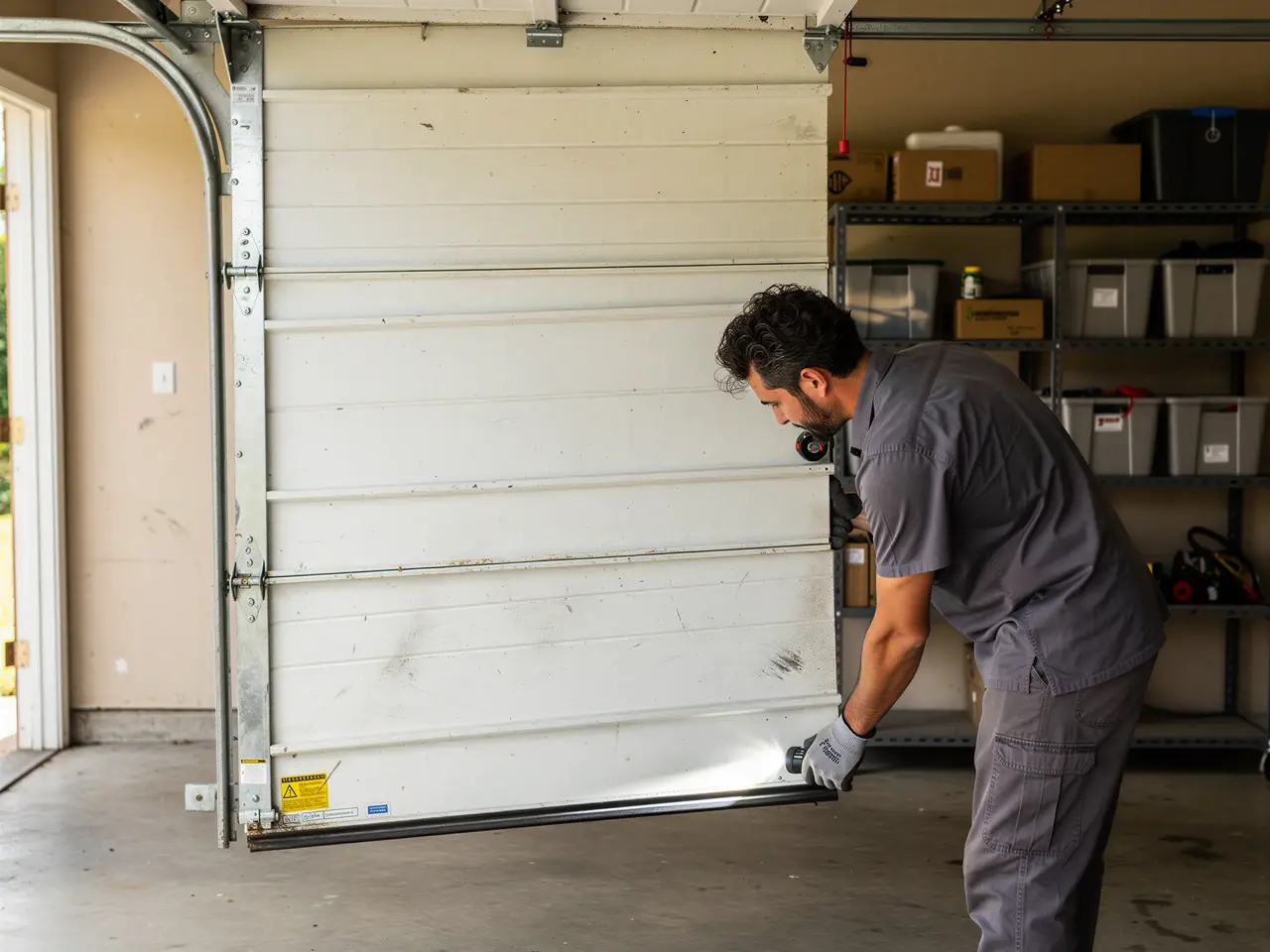
What the Fix Involves
Most calls we get in Sandy Springs come down to one of three things: a broken torsion spring, a dead or dying opener, or a track that's bent enough to bind the rollers. The repair itself is usually straightforward once we're looking at the door. A broken spring gets replaced with one matched to the door's weight and wind pattern, not just swapped for whatever's on the truck. An opener from the 1980s or 90s era - and a lot of Sandy Springs garages still have one, since the housing stock here runs median 1980 with most of it built in the 1980s and 90s - often needs the whole unit replaced rather than patched, because parts for those chain-drive units stopped being made years ago. Track work means pulling the door off the rollers, straightening or replacing the bent section, and re-squaring it against the jamb so it doesn't walk off true again in a month. None of this is exotic work. It's mechanical, it's repeatable, and it's the same handful of fixes over and over because the housing stock here is old enough that original hardware is wearing out on a predictable schedule.
The DIY Question
Cleaning photo-eye sensors, tightening loose hinge bolts, lubricating hinges and rollers - a homeowner can do all of that safely with a ladder and ten minutes. Replacing a torsion spring is not in that category. A torsion spring on a standard door holds enough stored energy to break a wrist or worse if the winding bars slip, and we don't recommend it as a weekend project no matter how many videos make it look simple. That's the one honest limit on this page: we'd rather lose a job to someone's pride than see someone hurt on their own garage floor. Where DIY makes sense is diagnosis, not repair. If the door won't open and the opener light blinks a set number of times, that code tells you what's wrong before you call anyone - check the manual or the sticker on the motor housing first. If the problem is a spring, a cable, or anything under tension, that's a call, not a project.
What Causes It Around Here
Sandy Springs housing runs from 1951 up through 2007, but the bulk of it - the 1980s and 90s stock across the area's older subdivisions - means a lot of torsion springs and openers are now thirty-plus years into a working life that's rated for maybe seven to twelve years of daily cycles. That's the core of it: age catches up with springs on a schedule, and this town's housing age puts a big share of doors right in the failure window at the same time. The climate here is a cold-moderate band, which matters more than people expect. Steel spring wire fatigues faster through repeated contraction and expansion than it does in a steady climate, and a cold morning start on an opener that's been sitting all night is a common point of strain on an aging gear set. None of this is dramatic weather - no hurricanes, no extreme freeze - just enough seasonal swing, repeated over three or four decades of ownership, to wear out a spring or a gear exactly when a home has outlasted its original hardware.
How It Shows Up
The door that won't budge past a foot or two, then slams down on its own, is almost always a broken spring - you'll often hear the snap days before the door actually fails. An opener that runs but the door doesn't move is usually a stripped gear inside a unit old enough to date back to the original build. A door that shudders or scrapes on one side as it travels is a bent track, and it gets worse every time the door cycles until the roller jumps the rail entirely. We see all three of these across Sandy Springs regularly, from the denser streets near Perimeter Center a mile out to the larger lots toward Chastain Park and the Brookhaven line. The pattern doesn't change much by neighborhood - it changes by the age of the door and how many years it's been quietly wearing down before anyone noticed.
Frequently asked questions
Why do so many Sandy Springs garage doors need spring replacement around the same age?
Most of the city's housing was built in the 1980s and 90s, median around 1980, so a large share of original torsion springs are now thirty-plus years old - well past the typical seven to twelve year service life. They're failing in the same window because they were installed in the same window.
Can I replace a torsion spring myself to save money?
We don't recommend it. A torsion spring holds enough stored tension to cause a serious injury if the winding bars slip, and that risk doesn't go down with a tutorial video. Sensor cleaning and hinge lubrication are fine DIY tasks; spring and cable work under tension is not.
Does Sandy Springs's weather actually affect garage door parts?
It's a cold-moderate climate here, not extreme, but the repeated seasonal swing between cold mornings and warmer afternoons adds cycles of contraction and expansion to spring wire over decades. Combined with housing stock that's now thirty to forty years old in many areas, that's enough to push a worn spring toward failure.
My opener runs but the door won't move - is that a quick fix?
Usually it means the opener's internal gear has stripped, which is common in units from the 1980s and 90s still running in older Sandy Springs homes. On most of these, the gear kit is no longer worth sourcing and the fix is a new opener rather than a repair to the old one.
By Neighborhood
Garage Door Repair across the Sandy Springs area
We also handle garage door repair in these Sandy Springs-area suburbs.
Book garage door service in Sandy Springs
Call now or request a quote - tell us what the door is doing and where you are.