
Sandy Springs, GA · Garage Door Service
What Actually Happens When We Come Out
A plain look at what a garage door service call includes in Sandy Springs, where most houses date to the 1980s and cold snaps hit original hardware hard.
- Repairs & new doors
- Springs & openers
- Serving 8 nearby communities
Leaving It Alone
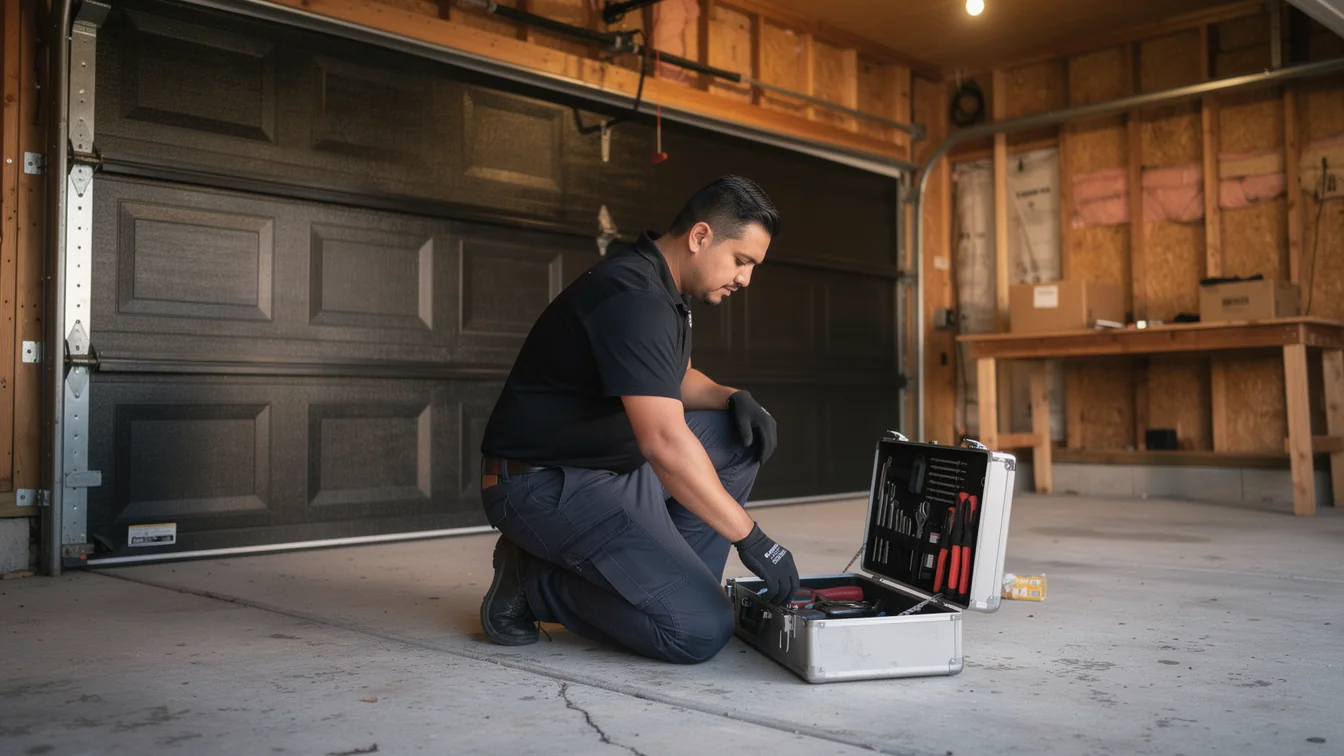
Not every noisy door needs a truck. If your garage door is from the 1980s-90s wave that makes up most of this service area's stock, a squeal on the track or a slow roll-up is often just dry rollers and hinges, not a failing spring. We'll tell you that on the phone if we can, because a $0 fix beats a billed visit every time.
Where we draw the line: if the door is original to a house built in that 1951-2007 range and the torsion spring has never been swapped, we won't talk you out of a look. Springs don't announce themselves until they snap, usually on the coldest morning of the year. Past that, we leave alone anything cosmetic - scuffed panels, faded paint, a dent that doesn't affect travel. That's a paint job, not a service call.
The honest limit here: if your opener predates the mid-90s and a part has failed, we may not be able to match it. Original hardware from that era is often out of production, and at some point matching is less practical than replacing the unit.
The Cost of This Job
What drives the bill on a service call isn't the brand of door, it's what's behind the panel. Torsion spring systems from the 1980s-90s construction boom common across this area's 28 named neighborhoods use a different cable and drum setup than what's installed in newer builds, and parts for the older style take longer to source. That adds time, not just a line item.
With median household income in the service area at $81,593, most of what we see is owners weighing a spot repair against a fuller rebuild - a spring and a set of rollers now, versus replacing the whole torsion system once two or three parts are already worn. Neither call is wrong. It depends on how much of the original 1980 hardware is still in play versus what's already been touched.
We won't quote a number without seeing the door - spring size, cable wear, and whether the opener needs attention too all move the total. What we can tell you up front is which direction a given symptom usually points, so you're not guessing before we get there.
The Situation
The service area runs about 177,885 households, with 66,165 of those owner-occupied houses - and most of that stock went up between 1951 and 2007, centered on 1980. That matters for garage doors specifically: a torsion spring rated for a certain door weight and cycle count in 1985 has had thirty-plus years to fatigue, whether or not anyone's touched it since.
Across the 28 named areas in this service footprint, the pattern repeats - a mid-80s build with the original steel door, original springs, and an opener that's been replaced once, maybe twice. That's the baseline we work from on most calls, and it's why we ask the build era of your house before we ask what's wrong with the door. The two are connected more often than owners expect.
What this isn't: a newer-construction market where most doors are under ten years old and still under a manufacturer's original parts warranty. That's a different kind of service call, with different parts on the truck.
How Local Conditions Play In
This area sits in a cold-moderate climate band, not the deep-freeze conditions that crack concrete footings, but enough temperature swing across a year to stiffen steel and thicken old grease. A torsion spring that's been fine since spring often tightens up and binds on the first real cold snap, especially if it's original to a house from the 1980s run that makes up most of the stock here.
What that means practically: lubrication that held up through summer humidity can gum up once temperatures drop, and a door that rolled smooth in August may groan or hang in January. We see more spring failures and cable slips in the cold months, not because the hardware is worse, but because decades-old metal doesn't flex the way it did when it was new.
It's not severe enough weather to justify over-engineering a fix - this isn't a region where you need reinforced wind bracing or hurricane-rated panels. It just means a yearly check before the cold sets in catches more than most owners expect, particularly on original 1980s-era systems that have never had one.
Frequently asked questions
How do I know if my spring is original to the house?
If your house falls in the 1980s-90s build range common across this area and no one's mentioned a spring replacement, it's probably original. We can check the spring's stamped date and wind count on site and tell you roughly how much life is left, without assuming you need a new one.
Will cold weather actually break my garage door?
The cold-moderate conditions here won't crack a door, but they do stiffen old steel and thicken grease, which is why spring failures and sticking tracks cluster in the colder months. A door with worn hardware that's been borderline all year often fails on the first hard cold snap.
Is it worth fixing an original 1980s opener?
Sometimes, sometimes not. If a single part has failed and we can source it, a repair makes sense. If the unit predates the mid-90s and parts are out of production, matching it gets impractical fast, and replacement ends up being the more honest answer.
Related garage door services in Sandy Springs
More garage door guides
Book garage door service in Sandy Springs
Call now or request a quote - tell us what the door is doing and where you are.