
Sandy Springs, GA · Garage Door Service
Opener Repair for Sandy Springs Garage Doors
Opener repair for Sandy Springs homes built mostly between 1980 and 2007, where cold-snap motor strain and aging circuit boards are the most common calls we get.
- Repairs & new doors
- Springs & openers
- Serving 8 nearby communities
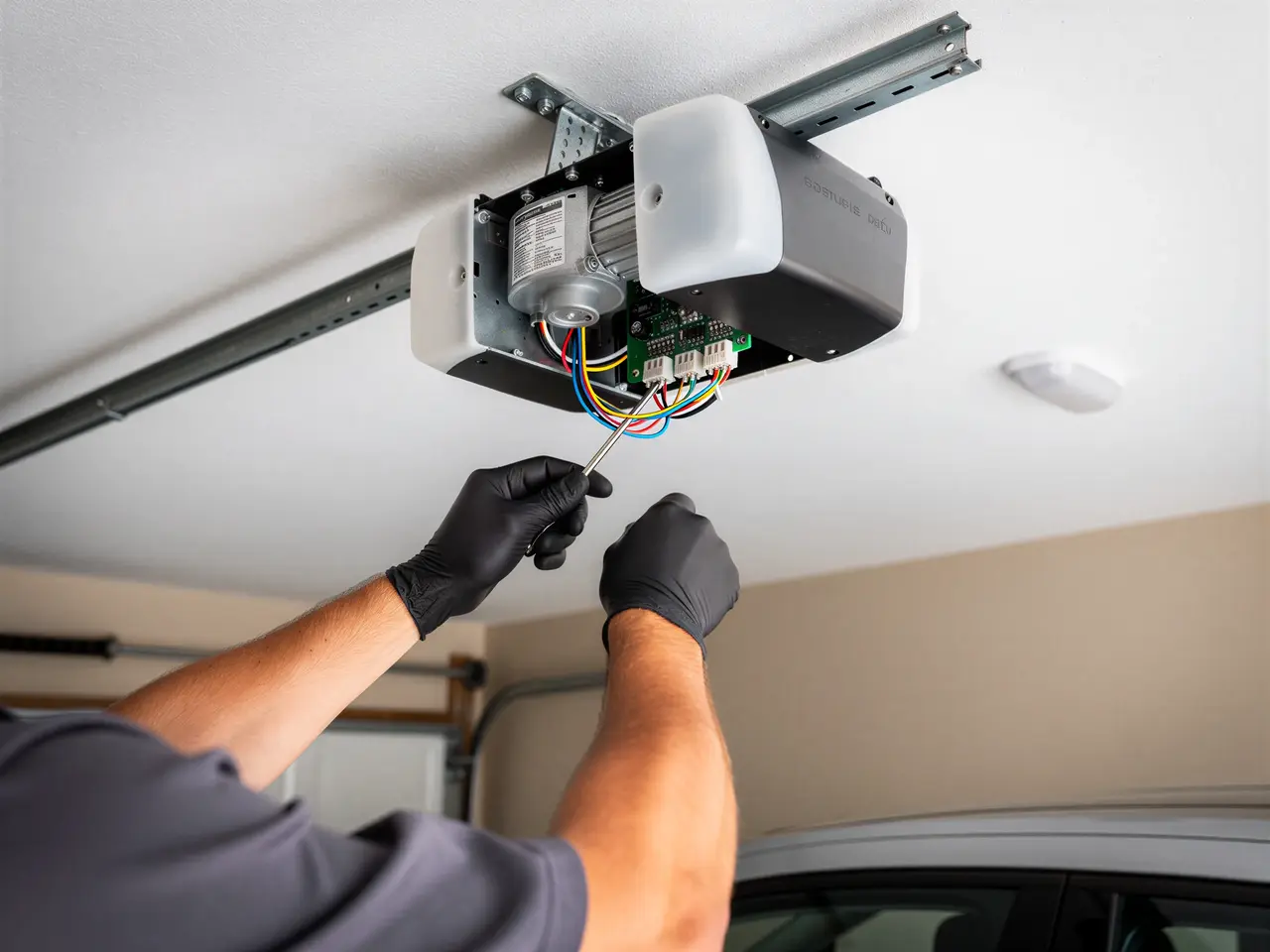
What the Fix Involves
An opener repair almost never means swapping the whole unit. Most calls start with the motor running but the door not moving, or the door reversing before it touches the floor. We start at the logic board and the drive mechanism - chain, belt, or screw drive, depending on what's installed - and work outward to the safety sensors and the wall control. If the circuit board has failed, we replace the board or the opener head, not the track or the springs, unless those are separately worn. Across the service area, where housing runs from 1951 up through 2007 with most stock dating to the 1980s and 90s, we see a steady mix of chain-drive units from that era alongside newer belt-drive installs from remodels. Older chain-drive openers often just need a new logic board, a capacitor, or a drive gear kit - parts that are still available for most of the common brands sold during that build window. Where we draw the line: if the opener is original to a 1980s install and the motor housing itself has cracked or the gear housing has stripped out from age, replacement costs less over time than chasing parts for a unit that old. We'll tell you straight when that's the case instead of running up a repair bill on a unit that's done.
The DIY Question
Replacing a remote battery or reprogramming a keypad is fair game for most homeowners, and we'd rather you save the service call for that. Where it stops being a good idea is anything involving the spring-loaded trolley, the limit switch adjustment, or opening the motor housing itself - these interact with a door under tension, and a wrong adjustment can let the door drop or the opener run the trolley off the rail. If your opener is clicking or humming but not moving the door, that's almost always a drive component or a capacitor, not something a reset fixes. We've had people make the problem worse by forcing a manual release lever back into gear mode while the door was partway open. If you're not sure which side of that line you're on, that's a fair question to ask before you start, not after.
What Causes It Around Here
Two things show up together in this service area more than elsewhere: housing age and climate band. With median construction landing around 1980 and most of the 28 named neighborhoods built out through the 80s and 90s, a lot of openers in service today are either original units well past their rated cycle count, or first-generation replacements installed 15 to 20 years ago that are now hitting board failure. The cold-moderate climate band here means winter isn't severe, but it's enough to stress capacitors and lubricant in units that were already marginal - a motor that's been drawing extra current all summer on a worn gear set tends to fail on the first cold morning that asks more of it. We don't see the extreme freeze-thaw cycling that cracks concrete aprons further north, but we do see grease stiffening in older screw-drive units overnight, which reads to homeowners as a dead opener when it's really just a drag the motor can't overcome until it warms up.
How It Shows Up
The most common complaint is a door that won't respond to the remote or wall button at all - check the breaker and the wall switch first, since that rules out half the calls before we arrive. Next most common: the door starts up, the opener motor runs, but the door doesn't move, which usually means a stripped gear, a broken belt or chain, or a disengaged trolley. A door that reverses immediately after it starts closing points to the safety sensors, often just misaligned or blocked, sometimes with a failed sensor itself. Grinding or a struggling motor noise without full failure usually means the drive gear is wearing out - this is common on units original to houses built in the 1980s and 90s that make up most of the stock here. If the opener light blinks a set number of times, that's a manufacturer error code and worth noting before you call, since it narrows down the fault before anyone touches the unit.
Frequently asked questions
Why did my opener stop working overnight with no warning?
Usually it's not sudden - a worn gear, aging capacitor, or stiffening grease has been building toward failure for months, and a cold morning or a few extra cycles finally tips it over. It feels sudden to you; the unit's been working harder than it should for a while.
Is it worth repairing an opener from the 1980s or 90s?
Sometimes. If the motor housing and gear housing are intact, a new logic board or drive gear kit is often cheaper than replacement. If the housing itself has cracked or stripped, we'll tell you replacement makes more sense rather than chase parts on a unit that age.
Why does my opener seem fine in summer and struggle in winter?
Cold mornings put extra load on a motor that's already compensating for worn gears or old grease. The cold doesn't cause the problem - it exposes a fault that was already there, which is why winter is when a lot of these calls come in.
By Neighborhood
Opener Repair across the Sandy Springs area
We also handle opener repair in these Sandy Springs-area suburbs.
Book garage door service in Sandy Springs
Call now or request a quote - tell us what the door is doing and where you are.