
Sandy Springs, GA · Garage Door Service
When a Spring Goes in Cold Weather
What a broken garage door spring means for Sandy Springs homes built 1951-2007, why cold mornings make it worse, and what this repair actually involves.
- Repairs & new doors
- Springs & openers
- Serving 8 nearby communities
Leaving It Alone
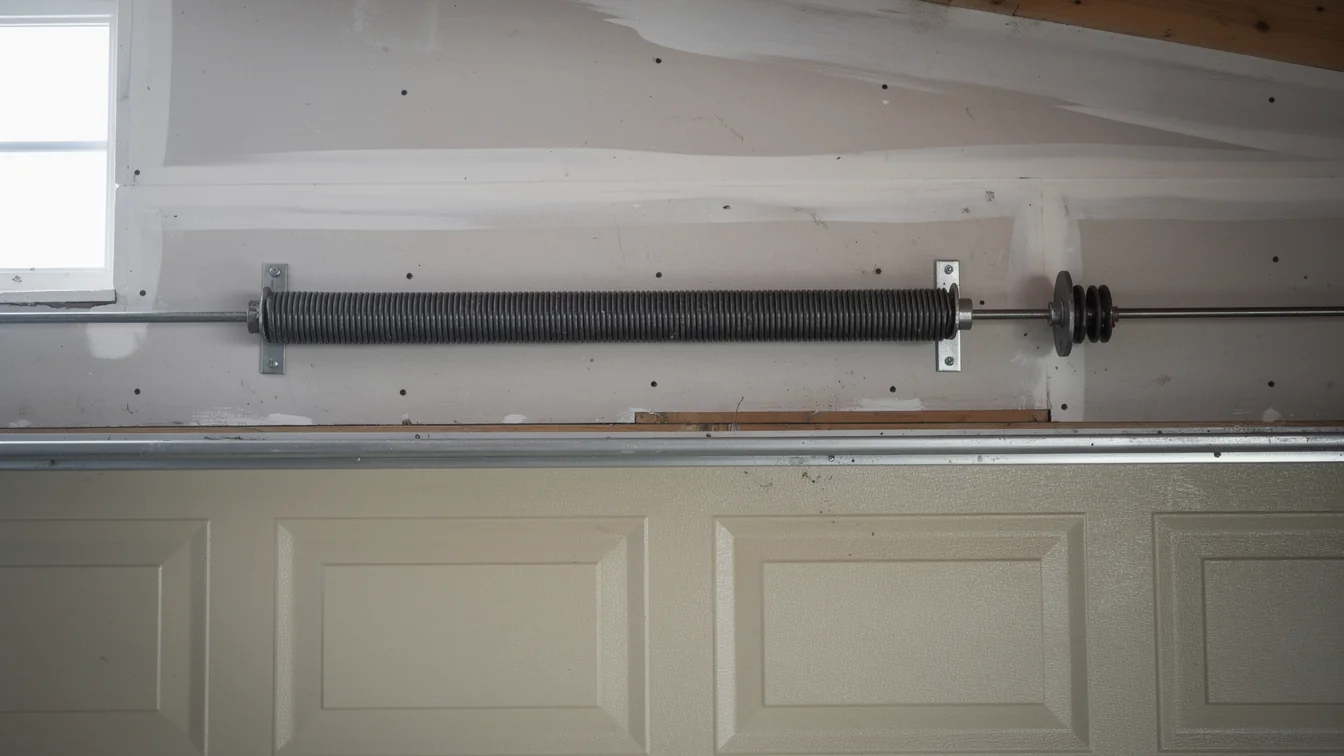
A torsion spring doesn't fail because of one cold morning. It fails because it's been winding and unwinding for years, and the cold is just the last straw. Houses in this service area were built mostly between 1951 and 2007, with the median landing around 1980, so a lot of the torsion hardware still in service is original or close to it. Steel contracts in the cold, and a spring that's already near the end of its cycle count loses what little give it had left right when you need the door to open.
Leaving a broken spring alone isn't a small thing. The opener will try to lift the door on its own, and without the spring doing its share of the work, it's pulling against the full weight of the panels through the drive gear or belt. That's how you turn a $200 spring job into an opener replacement. If the door is already hard to lift by hand, or came down with a bang instead of a controlled drop, don't run the opener again until someone's looked at it. That's not caution for its own sake - it's how you avoid a second failure on top of the first.
The Cost of This Job
I'm not going to put a number here that I can't back up. What I can tell you is what drives the cost: whether you've got one spring or two, torsion or the older extension-spring setup still found on some of the 1980s and 90s builds across this area, and whether the drums, cables, or bearing plates took damage when the spring let go. A clean torsion spring swap on a door that's otherwise sound is a different job than one where the cable jumped the drum and chewed into the track.
The honest limitation: I can't quote a firm price over the phone for a spring that broke in winter without knowing the door's age and spring type, and giving a number before looking at it does nobody any favors. What I can do is tell you the difference between a repair and a point where replacement makes more sense - usually once the door, track, and opener are all original from a build in the 1980s range and starting to show wear together, not just the spring.
The Situation
This service area covers a wide stretch, from close-in spots like Perimeter Center a mile out to areas ten or more miles off like Druid Hills and Stone Mountain. Across all of it, the housing stock skews the same way: mostly 1980s and 90s construction, with the overall range running from 1951 up through 2007. That matters for springs because torsion hardware from that era wasn't built to the cycle-life standards used today, and nobody's restocking the exact wind and wire gauge that shipped on a lot of those doors.
Across the roughly 177,885 households here, about 66,165 are owner-occupied houses - the kind of door-and-opener setup this page is about, not a managed apartment garage. With a median household income around $81,593, most owners calling about a broken spring are looking at a same-week fix rather than putting it off for a season, which is the right call. A spring that's already failed isn't getting better on its own, cold or not.
How Local Conditions Play In
This area sits in a cold-moderate band - not the deep freezes you'd get further north, but enough of a swing that a spring already near its limit will often pick the coldest stretch of the year to go. Cold steel is less forgiving than warm steel; it's stiffer and more prone to a sudden break rather than a slow stretch. That's why spring failures cluster on the first hard cold mornings rather than spreading evenly through the year.
The cold also thickens whatever lubricant is left on the coils and the bearing plates, which is part of why a door that was already sluggish in fall suddenly won't move at all in winter. If your door's been getting harder to lift by hand over the last few months, that's the spring losing tension gradually, and a cold snap is usually what finishes the job. Keeping the track and hinges lightly lubricated through the colder months helps the rest of the hardware, but it won't save a spring that's already past its cycle life - that one just needs replacing.
Frequently asked questions
Why did my spring break on such a cold morning?
Cold steel is stiffer and less forgiving than warm steel. A torsion spring that's been weakening for a while - common in this area's 1980s and 90s stock - tends to give out on the coldest mornings rather than evenly across the year, since the cold removes whatever flex was left in it.
Is it safe to open the door by hand after a spring breaks?
Only briefly, and carefully. Without the spring, the door's full weight is on you, not the hardware. If it's heavy or won't move smoothly, leave it where it is and don't run the opener - that just shifts the strain onto the drive mechanism instead.
Do older doors in this area need a specific spring size?
Often yes. Doors from the 1980s and 90s builds that make up most of this area's stock sometimes used wind and wire combinations that aren't common stock anymore, so matching the spring to the door's age and weight matters more than grabbing a generic replacement.
How much should I expect to pay?
I can't give a number without seeing the door - it depends on spring type, whether one or two need replacing, and any damage to cables or drums from the break. What I can do is walk through the difference between a repair and a point where replacement makes more sense once I've looked at it.
Related garage door services in Sandy Springs
More garage door guides
Book garage door service in Sandy Springs
Call now or request a quote - tell us what the door is doing and where you are.