
Sandy Springs, GA · Garage Door Service
Roller Replacement for Mableton Garage Doors
Mableton's 15,343 households sit mostly on 1980s-era doors, which means steel rollers worn past their nylon replacement window. We drive out from Sandy Springs to fix it.
- Repairs & new doors
- Springs & openers
- Serving 8 nearby communities
What the Fix Involves
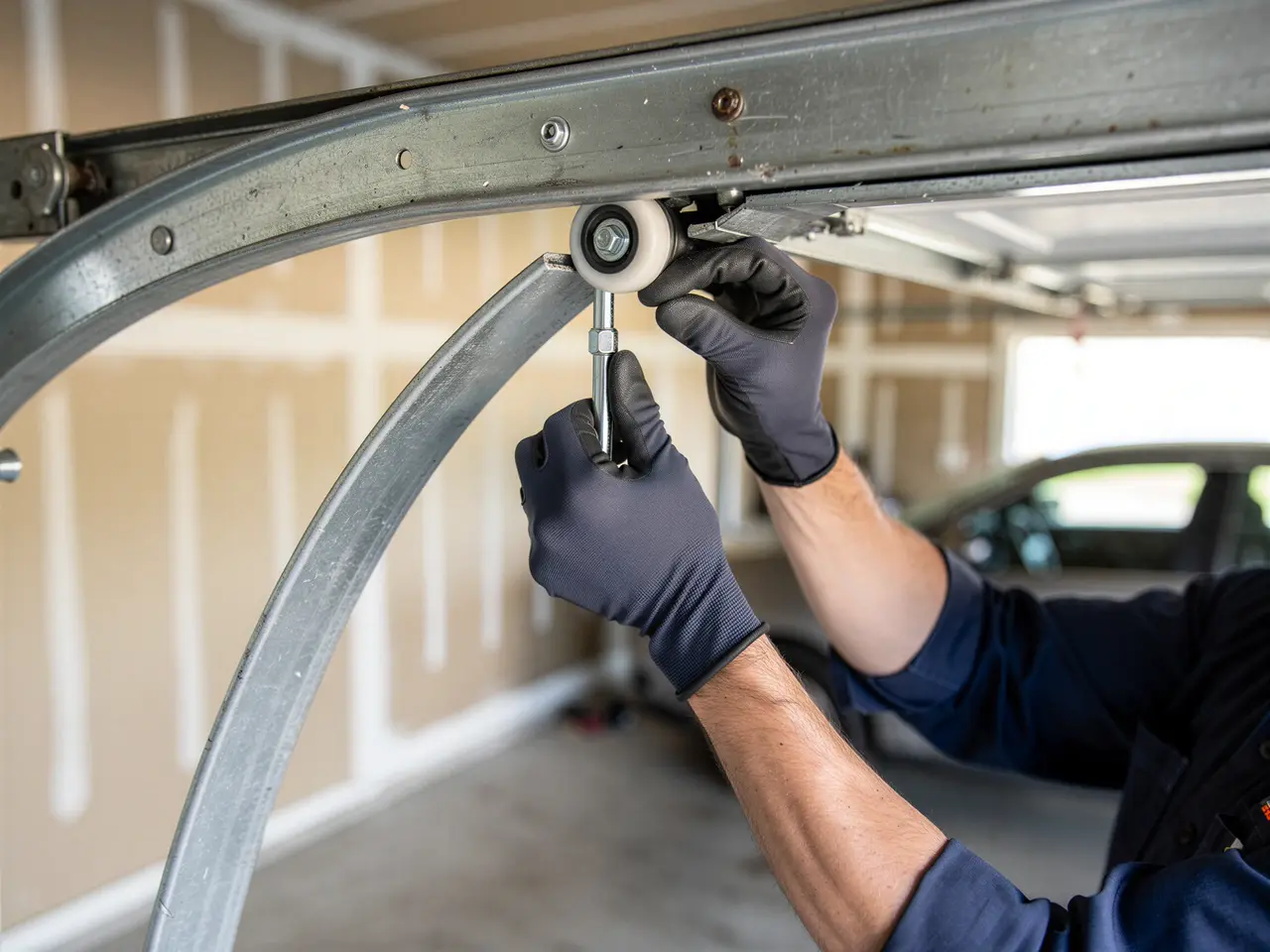
Mableton has about 15,343 households, which is a mid-size town by the standards of the suburbs we cover - not a sprawling market, but enough volume that we see the same roller failures repeat house after house. The job itself is simple to describe: we pull the old rollers out of the track, one at a time, check the hinges and brackets they ride in for wear, and set new rollers in place without letting the section drop or the cable walk off the drum. What changes house to house is which roller style we're pulling. Mableton's median year built sits around 1985, which lines up with a run of doors built with steel rollers on open ball bearings - cheap to make, loud, and prone to chipping the track edge as they age. On a door that old, roller replacement almost always turns into a look at the track alignment too, since 40 years of steel-on-steel wear tends to groove the rail unevenly.
The DIY Question
Rollers are one of the few garage door parts a careful homeowner can swap without real risk, provided the door is down, the opener is unplugged, and nobody's hands go near the bottom bracket on a torsion door (that bracket carries spring tension and it isn't a DIY part under any circumstance). Swapping a few worn rollers on the top or side of the door, away from the bottom corners, is a reasonable weekend job if you've got the right roller size and a pair of pliers. Where it gets harder in a 1985-era Mableton house is when the track itself has worn a step or a burr from years of steel rollers - a new roller dropped into a damaged track will bind again within weeks. That's the part that's easy to miss from the ground and the reason we check the whole rail, not just the roller, when we're out there.
What Can Go Wrong
The common failure on doors from this era is a chipped or flat-spotted steel roller that's started gouging the track, which shows up as a grinding or clunking sound right as the door passes that section. Left alone, a damaged roller eventually jumps the track entirely, and on a double door that's a heavier section coming off its rail - not something you want to be standing under. The other issue we see in homes built mid-80s through the 90s is rollers seized in their stem, usually from old grease that's hardened rather than lubricated. A seized roller doesn't turn at all; it just drags, which puts extra load on the opener and wears the track twice as fast. Neither failure is an emergency most weeks, but both get worse the longer the door keeps running on them.
How Long It Takes
A straightforward roller swap - new rollers all the way around, track in decent shape - is a short job, usually under an hour once we're on site. It runs longer if the track needs straightening or replacing, which is common enough on houses built in the mid-1980s that we plan for the possibility rather than treat it as a surprise. We're coming from Sandy Springs, about 14 miles out, so factor that drive into when we can get to you; we don't keep a branch in Mableton and we're not going to pretend otherwise. Scheduling the roller work alongside a quick check of the cables and hinges, while we're already in the garage, usually adds only a few minutes and saves a second trip.
Parts We Carry
We stock nylon rollers in the common sizes used across the doors we see in this part of the metro, which covers the bulk of the mid-1980s builds that make up Mableton's housing stock. Nylon is the standard upgrade from the original steel - quieter, and it won't gouge a track the way steel does over time. Where we run into trouble is older or less common stem lengths and some heavier-gauge commercial-style rollers; those sometimes need to be special-ordered, which can add a day or two. We'll tell you up front if your door needs one of those parts rather than installing something close enough and hoping it holds.
How It Shows Up
Most Mableton calls for this start the same way: a scraping or popping noise that gets worse over a week or two, then a door that hesitates or jerks at one specific point every time it opens. That's a roller hitting a damaged spot in the track, and it tends to happen on the same section repeatedly rather than randomly. Some owners also notice the door running noticeably louder than it used to, which is often the steel-roller-on-steel-track sound showing up as the original rollers wear down. Cold mornings can make it worse temporarily, since stiff old grease in a seized roller takes longer to loosen once temperatures drop, though this area's climate is only moderately cold, not severe.
Frequently asked questions
How do I know if it's the rollers and not the opener?
Pull the door by hand with the opener disconnected. If it still grinds, jerks, or sticks at the same spot, that's mechanical - almost always a roller or track issue, not the opener. If it moves smoothly by hand but struggles with the opener running, the problem is more likely the opener itself.
Will new rollers fix a noisy door from the 1980s?
Often, yes, if the noise is roller-related. Swapping worn steel rollers for nylon cuts a lot of the grinding and rattling common on doors from that era. If the track itself has been gouged by years of steel rollers, though, you may need track work too before the noise fully goes away.
Do you carry parts for older roller styles?
We stock the common sizes that cover most of what we see in houses built in the 1980s and 90s around here. Less common stem lengths or heavier commercial rollers sometimes need to be ordered in, which can add a day or two - we'll tell you before we start if that's the case.
Book garage door service in Sandy Springs
Call now or request a quote - tell us what the door is doing and where you are.